The Operating System of Time: Why Scheduling Is Solved and What Comes Next

Updated: Oct 1, 2026
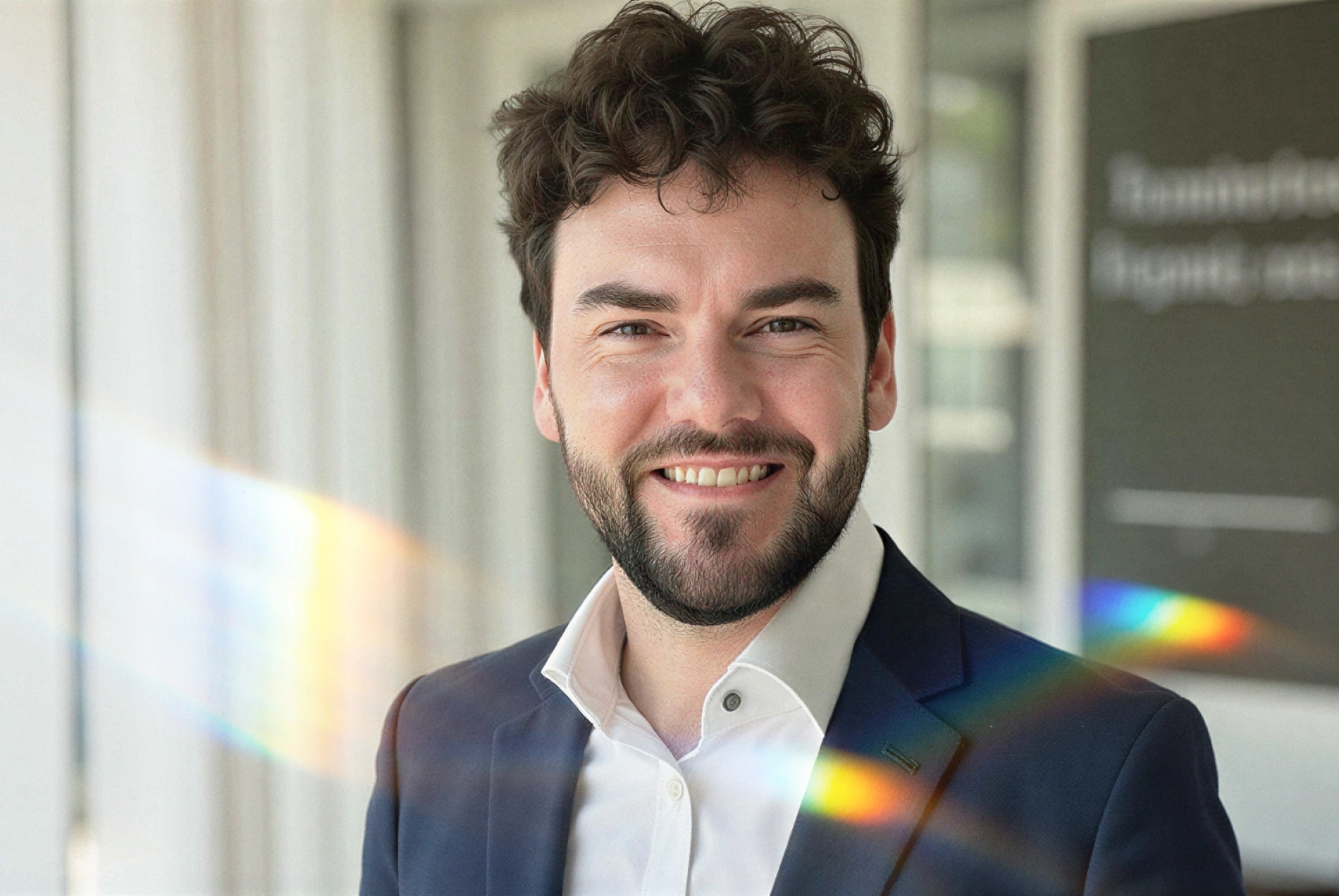
The operating system of time is a coordination layer that sits between people, AI agents, calendars, and communication tools, and decides not just when to meet, but whether to meet at all. It is the category Doodle is building after declaring that scheduling, the problem it spent 18 years solving, is finished. As CEO Christian Fielitz puts it: "Scheduling is solved. It's not something that will make us famous anymore." What comes next is a system that orchestrates how humans and agents spend the scarcest resource any organization has: time and attention.
This is the definitive account of what that means, drawn from Fielitz's June 2026 conversation on the Vlad Catcher Show.
What "operating system of time" actually means
Start with the definition, because the phrase is doing real work.
"We're building what we call the operating system of time, which is not about when to meet anymore, but should we meet at all? Should this be a meeting? How long should it be? Where should we spend our time and attention?"
A calendar records decisions about time. An operating system of time makes them. The shift is from a passive ledger of commitments to an active layer that reasons about whether a commitment should exist at all. Those four questions (should we meet, should it be a meeting, how long, where to spend attention) are the API of the category.
Why scheduling is solved, and why that's the start, not the end
Doodle has a credible right to declare scheduling solved, because it largely solved it. The origin story is almost defiantly human:
"It started in the most human thing ever. In 2007, two people wanted to get to dinner faster, to meet their friends and family faster. They looked around at how they could do this, and they started something that became its own category: group polling. Asking people when they have time and come together."
Eighteen years and roughly 30 million customers later, that idea had matured into infrastructure. And that's precisely the problem with a solved problem: it stops being a frontier. The hard, unglamorous truth Fielitz had to confront is that the thing that made Doodle famous was no longer the thing that could make it matter.
"We talked to our customers and said, actually, scheduling is the wrong thing. Scheduling is solved. It's not something that will make us famous, or help us build this new category."
Declaring victory on scheduling isn't a retreat from it. It's the precondition for moving up the stack, from arranging time to orchestrating it.
The three things the OS sits between: humans, agents, calendars, comms
The clearest way to understand the category is structural. Fielitz describes it as a layer with a specific position in the stack:
"The easiest way to think about it is that it's an agent coordination platform, or layer. It sits between the humans, the agents, the calendar, and how you communicate, and it orchestrates those behaviors."
Unpack the four things it sits between:
Humans: the people whose time and attention are being coordinated, and whose priorities should drive the system.
Agents: the AI systems increasingly acting on people's behalf, which now need coordinating just like humans do.
Calendars: the existing record of commitments, across every ecosystem (Google, Microsoft, Apple), not just one.
Communication: the channels where coordination actually happens, from email to chat.
The orchestration role is the point. None of these four layers can coordinate the others on their own. A calendar can't tell an agent to stop booking a person who needs focus time. A chat tool doesn't know your business priorities. The operating system of time is the connective tissue that makes them act in concert.
Why this matters now: agents need coordinating too
For most of software history, coordination was a human-to-human problem. That assumption is breaking. As AI agents start scheduling, drafting, and acting autonomously, they generate their own coordination load, and without a layer above them, they optimize locally and collide globally. Fielitz frames the use case concretely:
"If you think about a professional services company trying to help a transformation (right now, with everything happening in AI), you try to understand: do the people actually work on acquiring the knowledge and the skills? Do the different business units talk to each other? We'd be there to help you orchestrate this faster, make sure people have the time they need to build the business."
That's the operating system of time in action: not booking slots, but making sure the right humans and agents are working on the most tangible things, in the right order.
Why this requires behavioral scientists, not just engineers
Here is the part that separates the category from a feature roadmap. Building a system that reasons about whether to meet requires understanding why humans decide to spend time the way they do, and that is not an engineering problem.
"When this used to be a pure tech company, the company that is now is a combination of behavioral scientists, neuroscientists, cognitive scientists, sociologists, anthropologists, to understand human behavior. Because that's something that hasn't been able to translate into tech. 'If this, then that' was always there. But really getting the logic out (why you decide to spend time on something in one instance, and then another you do something else) is very hard to grasp."
Traditional software encodes deterministic rules: if this, then that. Human time allocation doesn't work that way. The same person declines a meeting on Monday and accepts an identical one on Thursday, for reasons that are contextual, emotional, and social. Capturing that logic, making software that models why rather than just when, is why Doodle now staffs disciplines most software companies have never hired. The category is as much cognitive science as it is code.
The fax-machine future: how meetings will feel in 2045
If the category succeeds, the artifacts of today's coordination will look absurd in hindsight. Fielitz reaches for a deliberately dated image:
"When I think about 2045, it should probably feel similar to how we think now about the fax machine. These little meetings that go beep-beep-beep and you're like, what is this sound? Why is everything blinking and screaming at me? We don't have fax machines anymore; everything is more in motion and fluid."
The fax machine is the perfect analogy because it wasn't replaced by a better fax machine; it was dissolved into a more fluid medium. That's the claim for meetings: not better-scheduled meetings, but coordination so ambient that the rigid, interruptive meeting feels like a relic. His vision for what replaces it:
"My vision is that we have time as something we appreciate and value, that we can allocate in the way we want, in line with our priorities and the context of our lives. In businesses it feels more ambient than it currently does. Something we leverage more consciously, versus just throwing it out and giving our agency to agents."
Note the last line. The future isn't handing your time to agents; it's using the system to stay more deliberate about your time, not less. The agents serve the human's priorities, not the other way around.
What this means for Doodle customers today
A flagship vision is only credible if it pays off in the present. The operating system of time isn't a someday product; it shows up wherever a company has a coordination problem that a calendar can't solve. Fielitz names three recurring triggers: companies hitting a growth inflection point, companies driving an AI transformation that demands protected time, and companies whose people are at the edge of burnout and need policies actually enforced. (We cover these in depth in 3 Moments You Outgrow Your Calendar Tool.)
The throughline: the moment coordination has to cross ecosystems, respect priorities, or defend human focus, you've moved past what a calendar does and into what an operating system of time is for.
The Doodle Time Institute: the research arm
The category comes with a research commitment most software companies wouldn't make. Fielitz founded a nonprofit to study time itself:
"One of the companies I founded in the last year is the Doodle Time Institute. It's a nonprofit: applied research that tries to help humanity understand time. How we do it, what it means for us. We don't have that understanding globally yet. We're working with universities, researchers, individual creatives, musicians, experts."
It's a telling move. You don't fund applied research into the nature of time unless you genuinely believe time, not scheduling, is the category. The Institute is the intellectual backbone of the claim: if you're going to build the operating system of time, you should also be advancing the world's understanding of what time is.
The brand vision in seven words
Fielitz compresses the entire ambition into a single line:
"When you think time, you think Doodle."
That's the destination. Not "when you need to schedule a meeting", but when you think time. The category bet is that coordination, done right, becomes synonymous with one name, the way a few rare brands become synonymous with their entire category.
The bottom line
The operating system of time is a deliberate, sequenced bet:
Scheduling is solved, so it's a foundation, not a frontier.
The new category is a coordination layer between humans, agents, calendars, and communication.
It decides whether to meet, not just when: that's the shift from recording time to orchestrating it.
It takes behavioral science, not just engineering, because human time allocation isn't "if this, then that."
The endgame is ambient coordination: in 2045, today's meetings should feel like fax machines.
The point is human agency, not surrendering your time to agents.
Scheduling answered when. The operating system of time answers whether, how long, and where your attention should go, and that's a far bigger question than the one Doodle started with in 2007.
Drawn from Christian Fielitz's June 2026 interview on the Vlad Catcher Show. Explore the series: Compute Will Be Like Oil · 3 Moments You Outgrow Your Calendar Tool · Killing What Made Us Famous · The Age of Managers Is Over · In 2045, Meetings Will Feel Like Fax Machines.
No credit card required