Prioritize ideas with the RICE scoring method

Updated: Sep 23, 2026

Prioritizing what to build is tough—especially when your roadmap is packed, resources are limited, and every idea seems like “the next big thing.” RICE is a proven method that brings structure to that chaos. It helps product teams make faster, more objective decisions and is flexible enough to work in fast-paced environments, including Agile teams.
Here’s how it works, where it came from, and how to use it effectively.
What is the RICE scoring method?
RICE stands for Reach, Impact, Confidence, and Effort. It’s a scoring framework that helps you weigh competing ideas or features by estimating how much value each brings versus the cost of delivering it. The model was created by the product team at Intercom, led by Sean McBride, to solve a common internal challenge: too many good ideas and not enough time. They needed a consistent way to evaluate opportunities—and RICE was their answer.
Here’s how each component works:
Reach: How many people will this initiative affect? Estimate it as a number per time period (e.g. users per month).
Impact: How much will this move the needle? Use a rough scale (3 = massive, 2 = high, 1 = medium, 0.5 = low, 0.25 = minimal).
Confidence: How certain are you about your Reach and Impact estimates? Expressed as a percentage (100%, 80%, 50%).
Effort: How much work is involved? Usually measured in person-months (or however your team estimates effort).
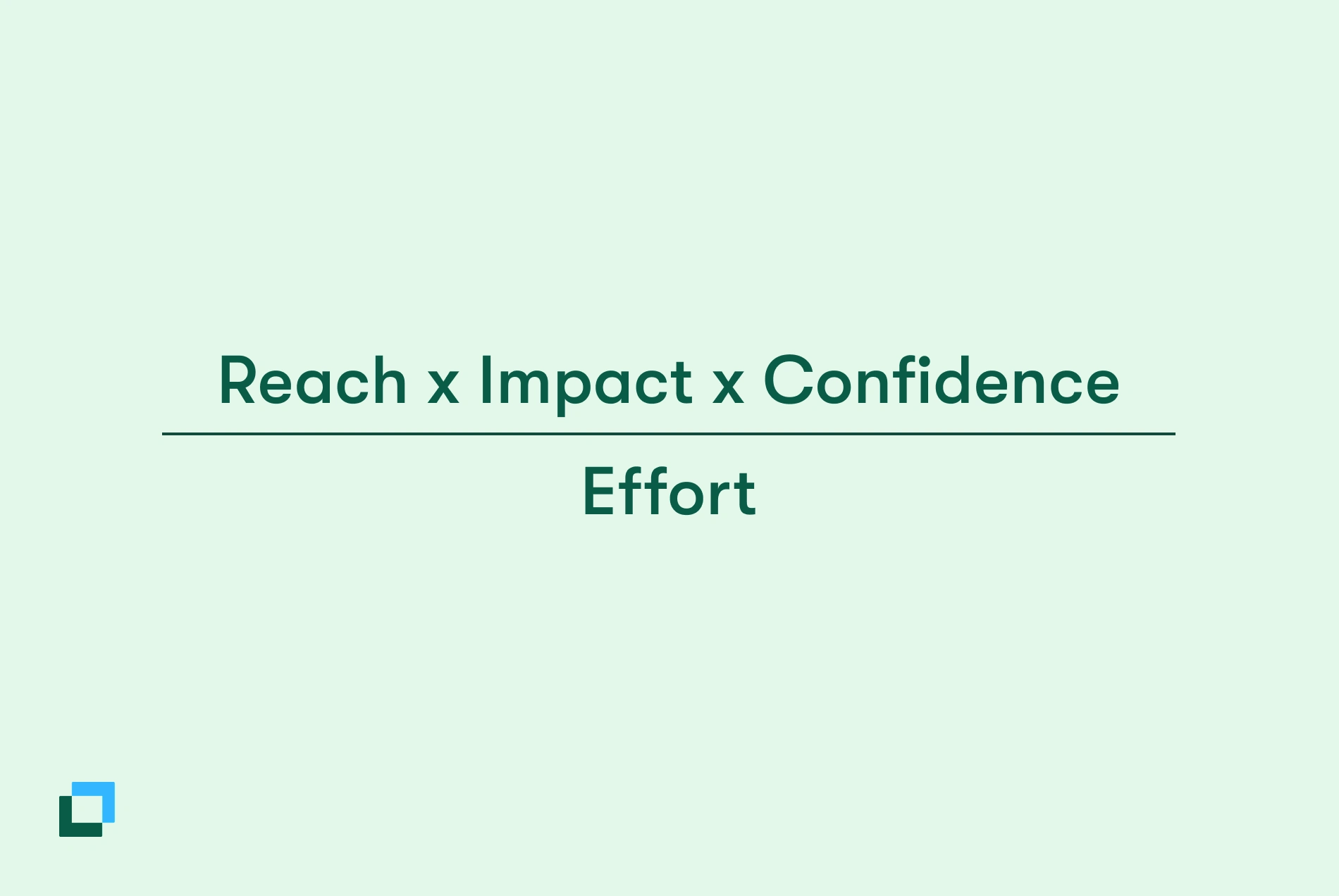
The formula is simple: (Reach × Impact × Confidence) ÷ Effort
Let’s say a new feature could reach 800 users/month (Reach = 800), has a high impact (Impact = 2), you're moderately confident (Confidence = 80%), and it would take about two person-months to build (Effort = 2).
Your RICE score would be: (800 × 2 × 0.8) ÷ 2 = 640
The higher the score, the more value you get for your effort.
What’s considered a good RICE score?
There’s no magic number that qualifies as “good.” The value of RICE lies in relative comparison. Once you’ve scored multiple ideas, you can stack-rank them to see which ones deliver the most return for the least effort.
A high-scoring feature that impacts a large user group might be something quick to build. A lower score might signal something too costly for the benefit—or something to defer.
Just remember: your score is only as accurate as your input. Be honest about effort. Don’t inflate the impact. And always flag low-confidence estimates for discussion.
When and where to use RICE
RICE shines when you’re overwhelmed with options. It’s ideal for product roadmaps, quarterly planning, triaging new feature requests, evaluating internal initiatives, and more.
If you work in Agile, RICE fits nicely into backlog grooming or sprint planning sessions. It helps teams move beyond gut instinct and focus on work that matters.
Schedule like a pro with Doodle
RICE is a framework, not a formula for perfection. Use it to guide conversations—not replace them. As you gather feedback and data, update your scores. RICE is iterative, just like your product.
One way to keep the process flowing? Use Doodle to quickly book planning sessions with your team or schedule customer interviews to get the insights you need for Reach, Impact, and Confidence.
Try scoring a few backlog items today—then Doodle your way to alignment.