PROTECT
Set your limits once. We'll say no for you.
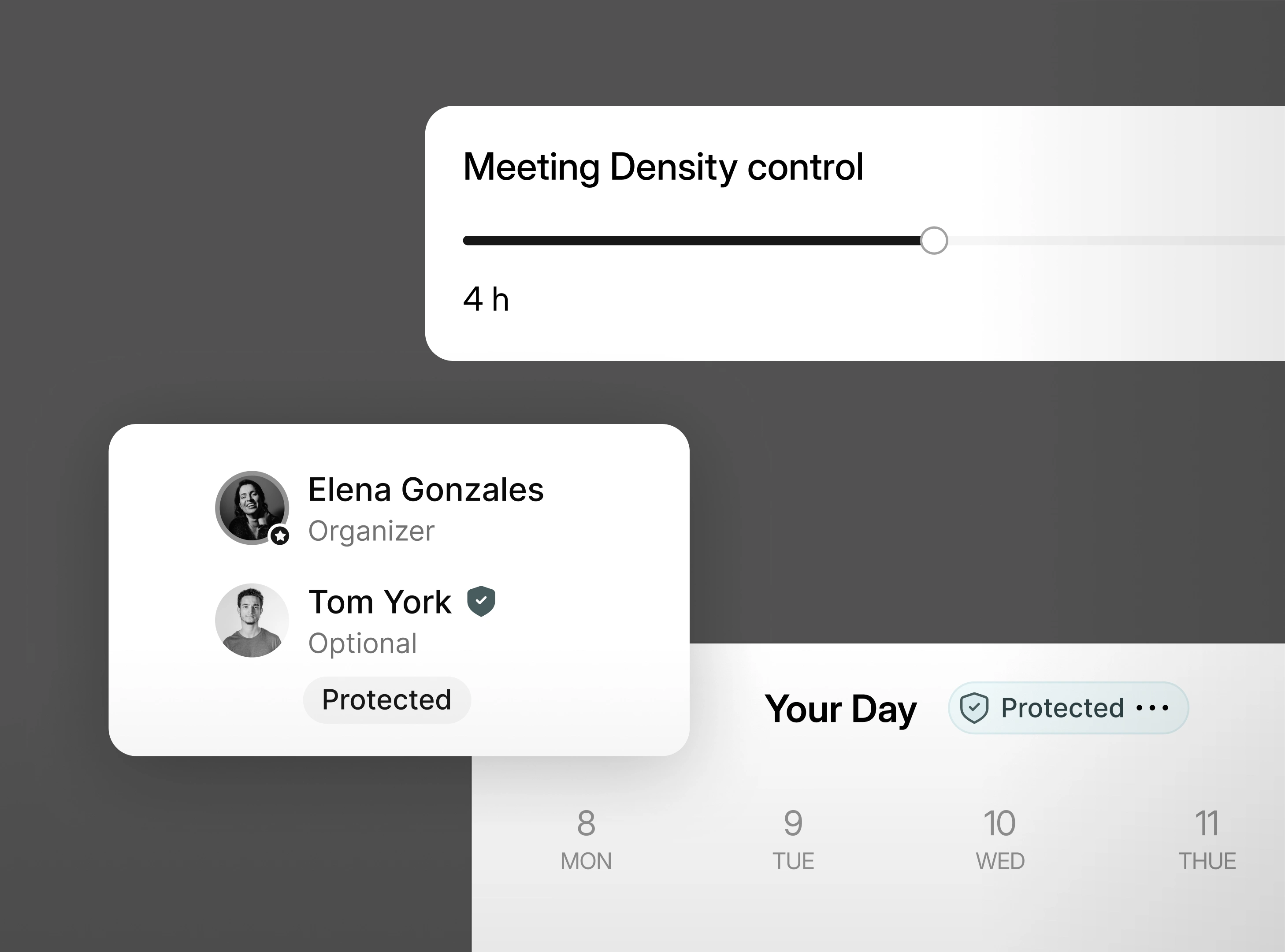
Set the buffer, the hours, the daily limit, once. Doodle enforces it automatically, on your calendar, your team's, or the whole organization's, so protected time holds on every new request.
39%
Of tracked time goes to deep focus, about 2 to 3 hours a day. [1]
13m 7s
Is the average focused session, down 9% in two years. [2]
50%
Of developers say they feel more productive when dedicated focus time is set. [3]

I have found Doodle incredibly useful and reliable for years. It is the only scheduling tool I will use. Easy, trustworthy, integrates easily into both Outlook and Google calendar.

HOW IT WORKS
Set the rule once. It holds on every booking.
Once Protect is on, it applies to every new booking automatically, whether that's your calendar, your team's, or every workspace in the organization.
STEP 1
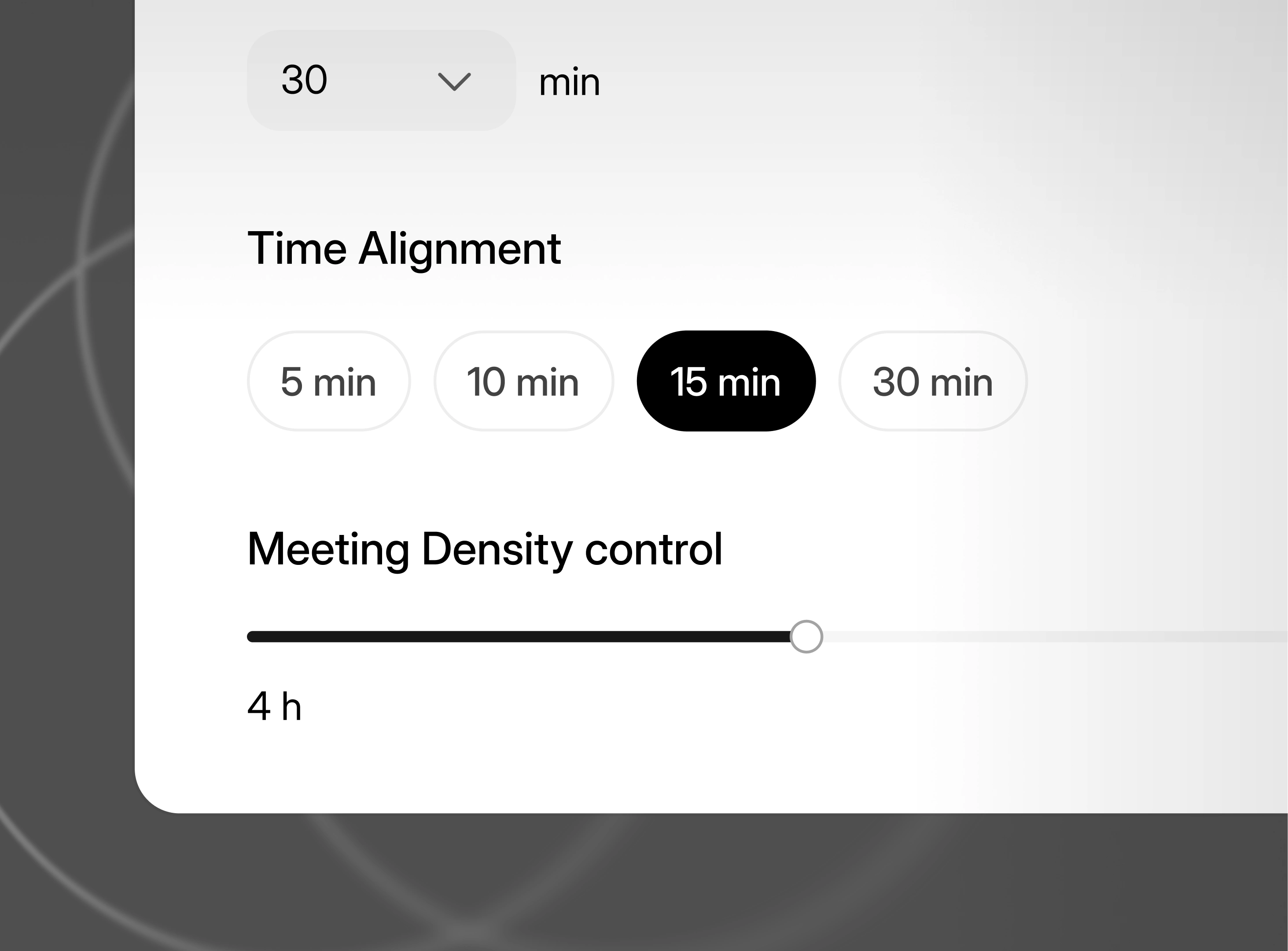
Set your rules
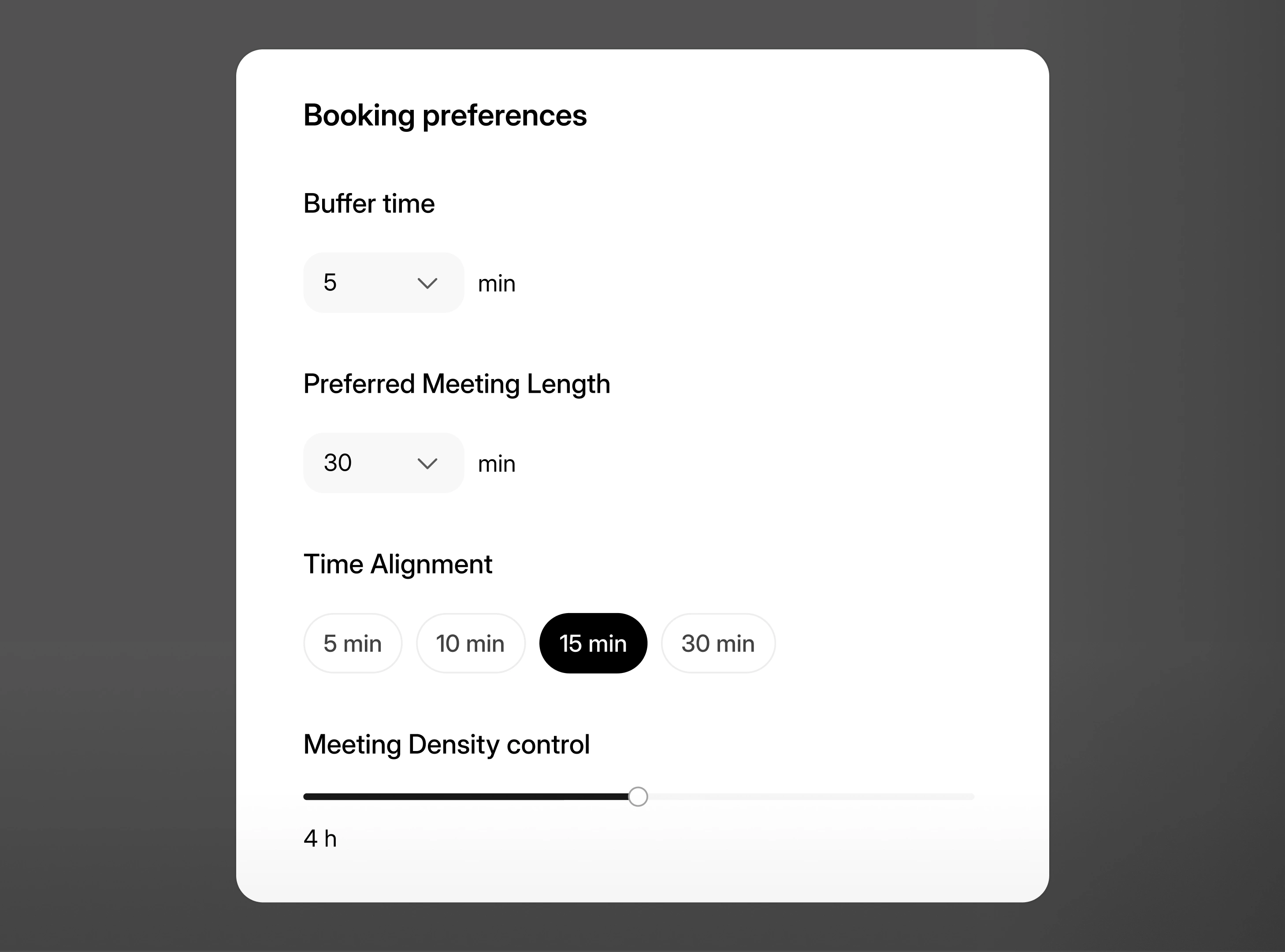
Buffer time between meetings, working hours, a daily meeting cap, and how meeting start times round to clean intervals. Set once, in one place.
STEP 2
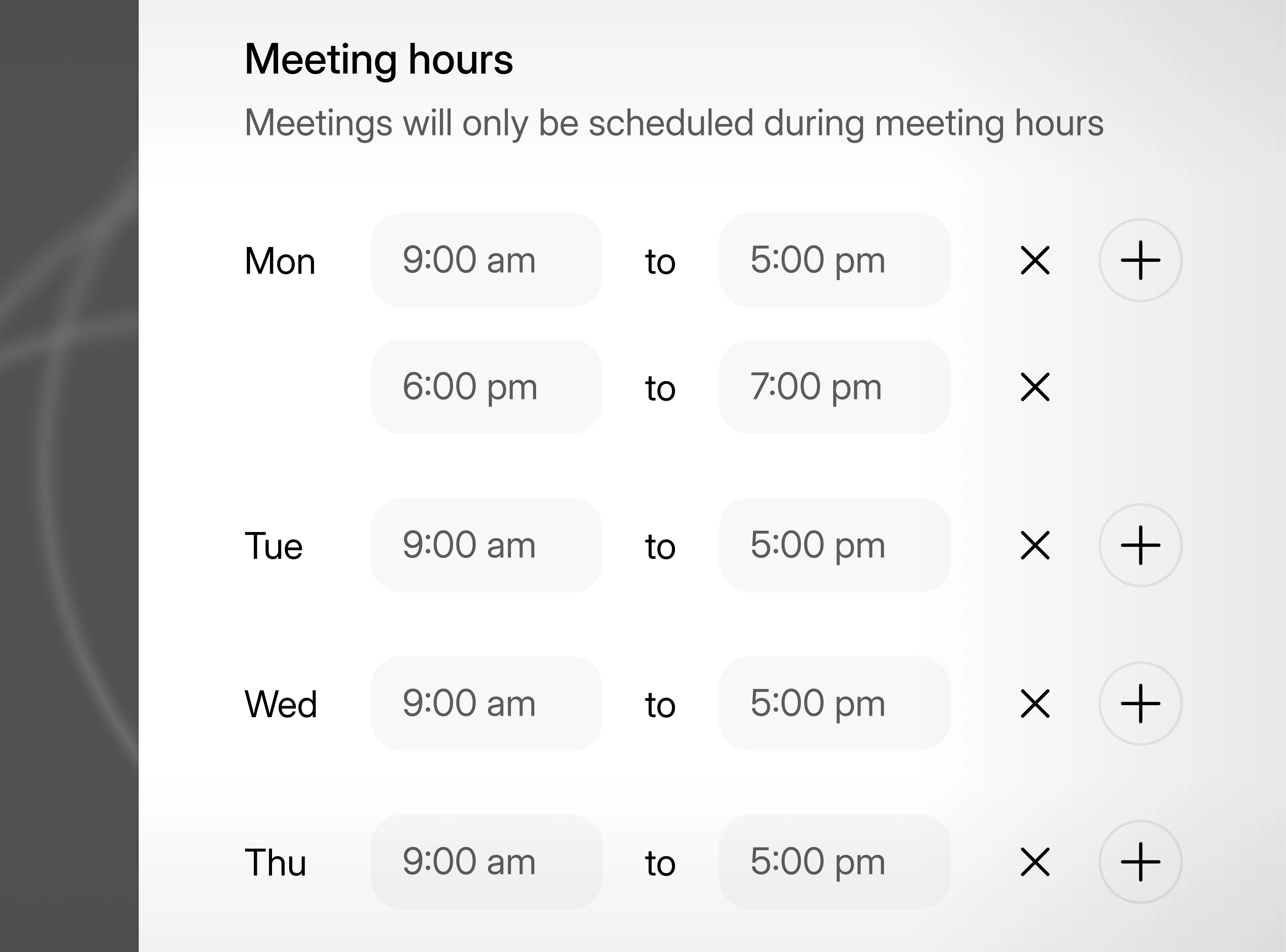
Doodle enforces it on every booking
Every new request is checked against the rule first. A request outside working hours never reaches the calendar in the first place.
STEP 3
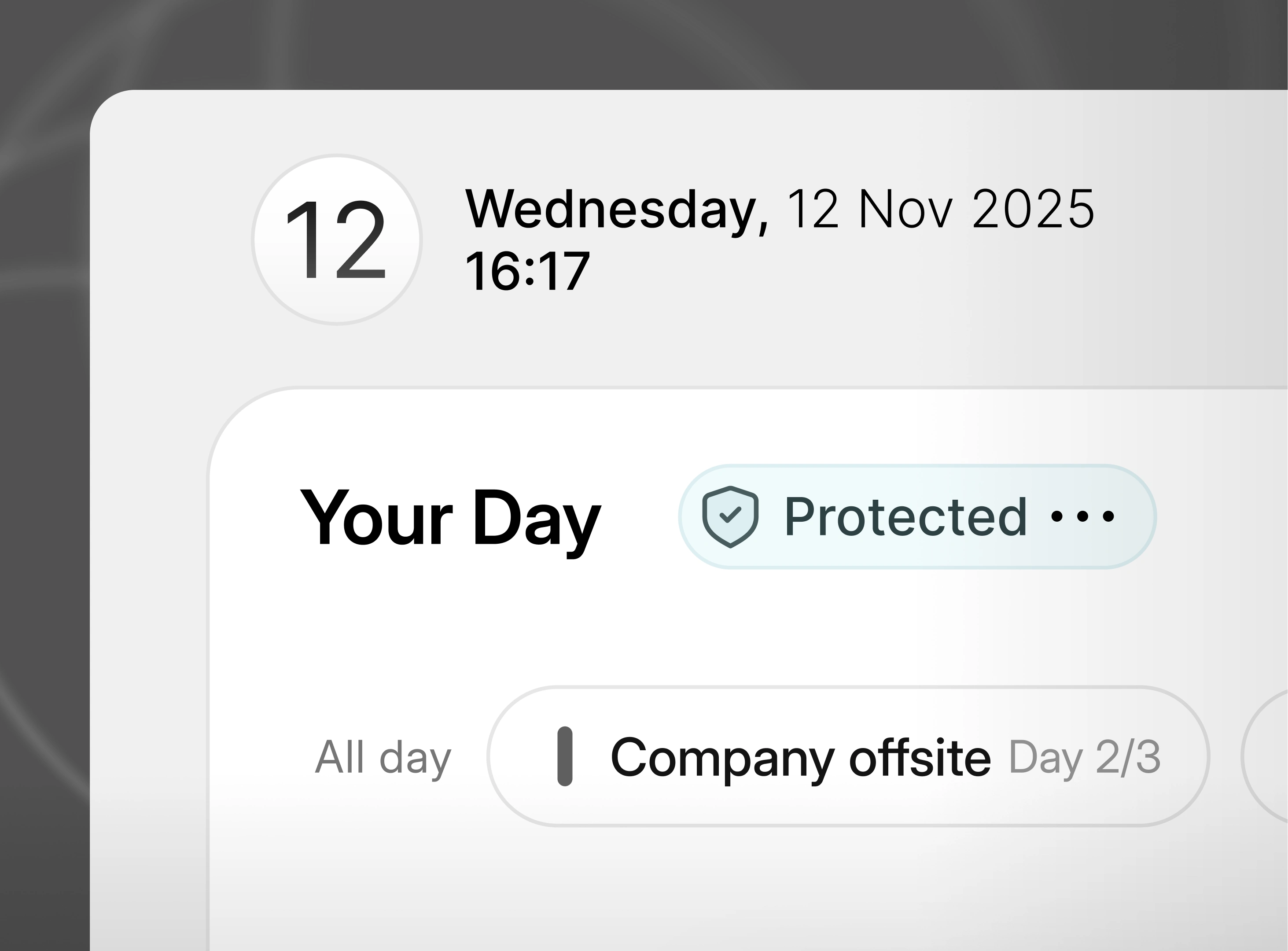
The rule does the declining
The rule holds without anyone declining a meeting by hand or explaining a boundary in a message.
WHY IT MATTERS
Humans easily underestimate how much time is really available.
We need something to help us protect our focus time, properly. The numbers tell their own story when it comes to the distractions we deal with on a regular basis, taking longer to refocus and reach optimal performance.
25 min
To resume interrupted work
A field study of information workers found it took 25 minutes 26 seconds on average to resume interrupted work, often after two other tasks in between. [4]
4.4 sec
Is enough to triple sequence errors
In a 2014 study, interruptions averaging 4.4 seconds tripled the rate of sequence errors in the task people returned to. [5]
68%
Spend time on low-value tasks
Eagle Hill Consulting found 68% of US workers regularly spend time on low-value, inefficient tasks (2025). A team default gives everyone the same protection. [6]
FOR INDIVIDUALS
Four settings that stop a full day from becoming an impossible one.
Protect on Pro puts the guardrails on your own calendar, so a full day stays livable and a busy week keeps room for focus.
- Buffer15 or 30 min
- Working hoursauto-decline outside
- Time alignment5/10/15/30 min
- Daily capmeetings/day
FOR TEAMS
The same rules, held consistently across a whole team.
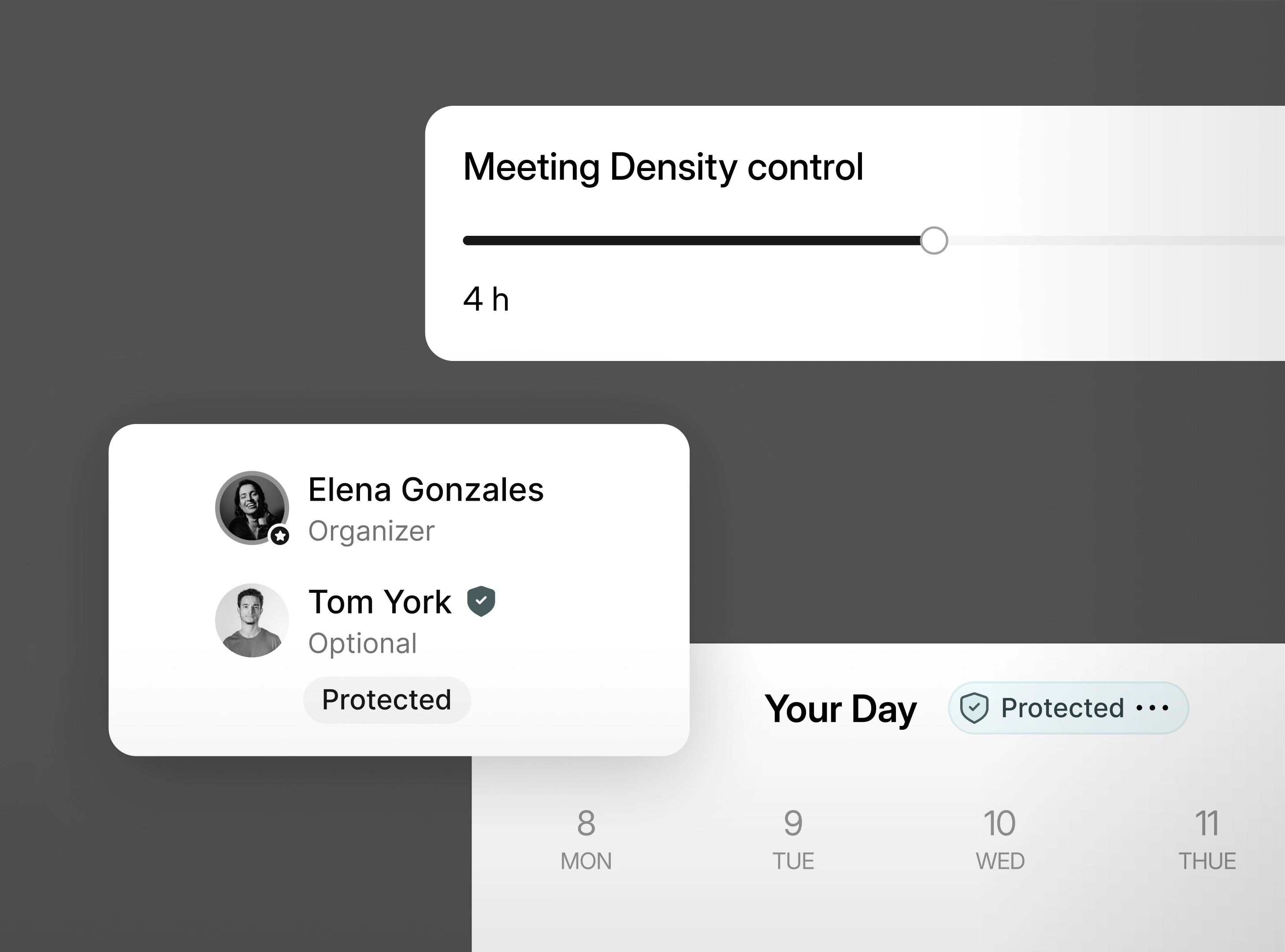
Team Booking Pages and Round Robin inherit the same protections. A buffer, working hours, and a daily cap apply across every member, so the rotation respects every member's limits.
- Rules apply consistently across every team member's calendar
- Booking pages round to the same clean interval team-wide
- Nobody on the rotation absorbs meetings the rest of the team declined
FOR THE ORGANIZATION
One protection layer for the whole organization.
Protect for Enterprise applies buffers, working hours, time alignment, and daily caps as a policy across every workspace.
Rolling this out across an organization?
- Org-wide protection with no per-user setup required
- An administrator sets the rule once, applied everywhere
- Ensure smoother compliance with your regional employment legislation
Works with the tools your team already uses






FAQs
Protect sets the minimum. Your own working hours and preferences are respected inside whatever policy applies, and the policy is what stops you having to defend your calendar against everyone else's week.
APPENDIX
Sources and citations
Every figure on this page comes from independent, published research, named below.
| Figure | What it measures | Period · basis |
|---|---|---|
| 39% | Share of tracked time spent in deep focus | [1] Hubstaff, 2026 Global Work Index · 140,000+ workers |
| 13m 7s | Average focused session, down 9% from 14m 23s (2023 to 2025) | [2] ActivTrak, 2026 State of the Workplace · 163,638 employees |
| 50% | How much more productive developers with deep-work time say they feel | [3] Forsgren et al., "DevEx in Action", ACM Queue, 2024 · 219 developers |
| 25:26 | Average time to resume interrupted work (minutes:seconds) | [4] Mark, Gonzalez and Harris, CHI 2005 · 24 information workers |
| 68% | US workers regularly spending time on low-value, inefficient tasks | [6] Eagle Hill Consulting, Jan 2025 · 1,375 employees |
[5] Altmann, Trafton and Hambrick, "Momentary interruptions can derail the train of thought," Journal of Experimental Psychology: General, 2014.

Set it once.
Set the buffer, the hours, and the cap once. They apply from the next booking on.